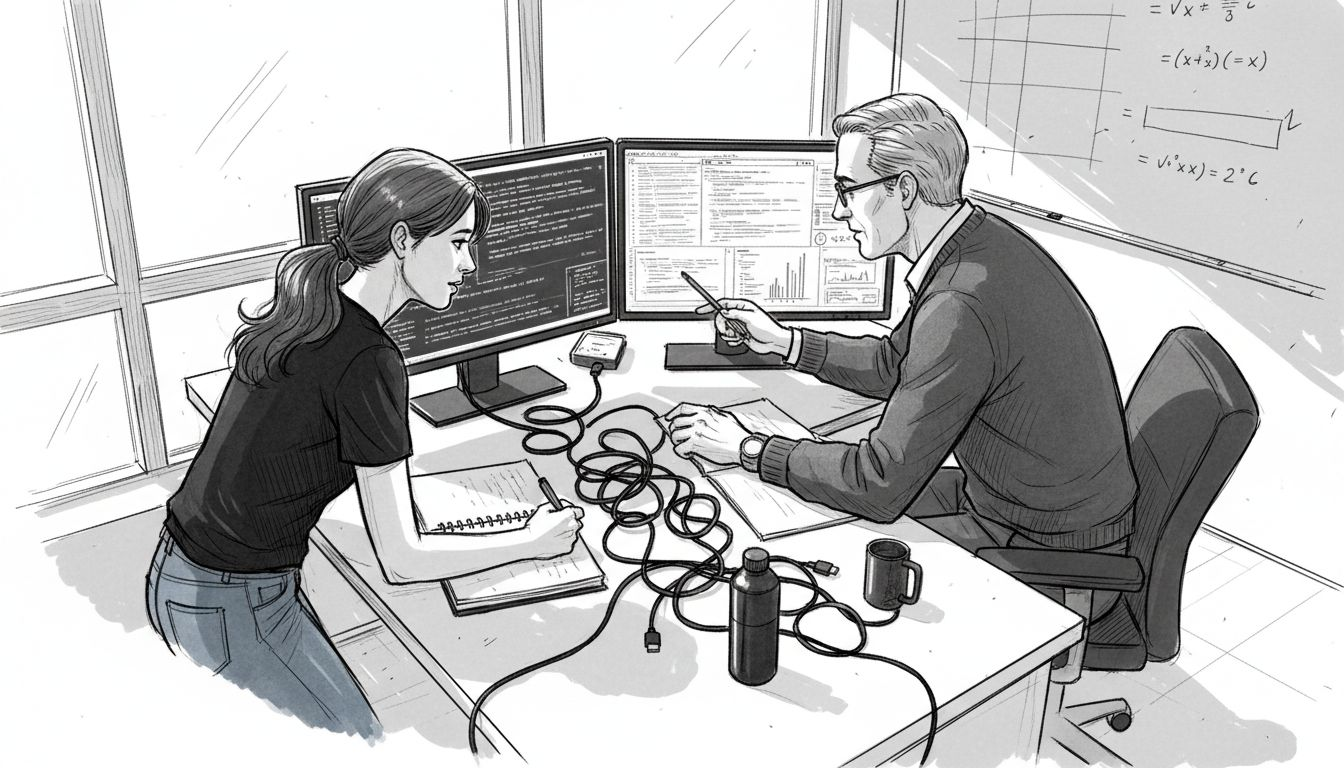
Importance of Mentorship for AI Engineers
Importance of Mentorship for AI Engineers
Many aspiring AI engineers struggle to find clear guidance while facing complex technology and career questions. Professional mentorship goes far beyond handing down textbook skills. It offers personalized growth, career advice, and ethical support in the ever-changing field of artificial intelligence. This article breaks down advanced mentorship approaches, explains different types of mentoring relationships, and shows how mentorship can speed up technical skill development for engineers around the world.
Table of Contents
- Defining Mentorship In AI Engineering
- Mentorship Types And Key Distinctions
- How Mentorship Accelerates Technical Skills
- Mentorship’s Role In Career Advancement
- Common Mentorship Challenges To Avoid
Defining Mentorship in AI Engineering
Mentorship in AI engineering represents a strategic professional relationship that transcends traditional skill transfer. Unlike generic professional guidance, AI engineering mentorship involves a nuanced, technology-driven approach to developing specialized expertise. Emerging research highlights the critical role mentorship plays in navigating the complex and rapidly evolving landscape of artificial intelligence.
At its core, mentorship in AI engineering involves an experienced professional providing targeted guidance to help junior engineers develop technical skills, understand complex system architectures, and gain strategic career insights. This relationship goes beyond simple knowledge transfer, focusing on personalized skill development tailored to individual learning styles and professional objectives. The mentor acts as a navigator, helping mentees understand not just the technical aspects of AI, but also the ethical considerations and industry dynamics that shape successful AI implementations.
The mentorship model in AI engineering is uniquely dynamic, requiring continuous adaptation to technological shifts. Advanced mentoring approaches now incorporate AI-driven tools that augment traditional mentoring techniques, creating personalized learning experiences. These innovative approaches allow mentors to provide more precise, data-driven guidance, helping AI engineers develop skills that align with emerging industry trends and technological advancements.
Pro tip: Seek mentors who not only understand current AI technologies but can also help you anticipate and prepare for future technological shifts and industry transformations.
Mentorship Types and Key Distinctions
AI engineering mentorship encompasses multiple sophisticated approaches, each designed to address unique professional development needs. Mentorship models vary significantly, ranging from traditional one-on-one interactions to advanced technology-enhanced experiences. These models are not interchangeable but strategically crafted to support different learning objectives and career progression stages.
The primary mentorship categories include one-on-one mentoring, group mentoring, peer mentoring, and AI-augmented mentoring. One-on-one mentoring provides deeply personalized guidance, allowing senior AI engineers to offer targeted advice tailored to an individual’s specific skill gaps and career aspirations. Group mentoring creates collaborative environments where multiple mentees can learn from a single experienced professional, fostering collective knowledge sharing and diverse perspectives. Peer mentoring introduces a horizontal learning approach where professionals at similar career stages exchange insights and support each other’s professional growth.
Research on mentoring dynamics reveals critical distinctions between formal and informal mentoring structures. Formal mentoring programs establish structured frameworks with predefined objectives, clear expectations, and measurable outcomes. These programs often involve institutional support, scheduled interactions, and documented progress tracking. Conversely, informal mentoring emerges organically through professional networks, spontaneous connections, and mutual professional interests. While less structured, informal mentoring can provide more flexible, authentic interactions that sometimes yield deeper professional relationships.
Here’s a comparison of key mentorship models in AI engineering:
| Mentorship Model | Individualization Level | Networking Potential | Use of Technology |
|---|---|---|---|
| One-on-One | Highly personalized | Limited | Minimal |
| Group Mentoring | Moderate | High | Optional |
| Peer Mentoring | Low | Moderate | Low |
| AI-Augmented Mentoring | Highly customized | Variable | Extensive |
Pro tip: Select a mentorship model that aligns with your specific learning style, career stage, and professional development goals to maximize your growth potential in AI engineering.
How Mentorship Accelerates Technical Skills
Mentorship serves as a powerful catalyst for rapid skill development in AI engineering, transforming theoretical knowledge into practical expertise. Technical skill acquisition dramatically accelerates when guided by experienced professionals who can provide nuanced insights beyond traditional learning methods. This targeted approach enables AI engineers to navigate complex technical challenges more effectively and efficiently.
The acceleration of technical skills through mentorship happens through multiple strategic mechanisms. Direct knowledge transfer allows mentees to learn advanced methodologies directly from experienced practitioners, bypassing the lengthy process of independent discovery. Mentors help engineers understand not just the technical implementation, but the underlying reasoning behind specific architectural decisions, coding strategies, and system design principles. This contextual understanding goes far beyond what textbooks or online tutorials can provide, giving mentees a significant competitive advantage in developing sophisticated AI solutions.
Moreover, mentorship creates an environment of continuous learning and critical thinking. By working closely with senior engineers, mentees learn to approach technical problems with greater creativity and analytical depth. Mentors challenge their mentees’ assumptions, introduce them to industry best practices, and help them develop a more holistic understanding of AI engineering challenges. This approach transforms technical skill development from a linear process into a dynamic, interactive journey of professional growth. Implementation-focused guidance becomes a critical component in bridging the gap between academic knowledge and real-world technical expertise.
Pro tip: Actively seek mentors who not only demonstrate technical excellence but also consistently challenge you to think beyond your current skill level and comfort zone.
Mentorship’s Role in Career Advancement
Career progression strategies demonstrate that mentorship is a transformative force in AI engineering professional development. Unlike traditional career paths, mentorship provides a strategic roadmap that goes beyond basic skill acquisition, offering nuanced guidance through complex professional landscapes. The mentor-mentee relationship becomes a critical conduit for navigating the intricate challenges of technological career advancement.
Mentors play a pivotal role in expanding professional networks and creating opportunities that would otherwise remain invisible to emerging AI engineers. By leveraging their established industry connections, mentors can introduce mentees to key decision makers, recommend them for critical projects, and provide insider perspectives on career advancement strategies. This network amplification is particularly powerful in the rapidly evolving AI technology sector, where professional relationships often determine career trajectory more significantly than individual technical skills alone.
Global career development research reveals that mentorship significantly impacts job retention, promotion rates, and overall career satisfaction. Mentors help engineers develop leadership skills, build strategic career plans, and cultivate the confidence necessary to pursue increasingly complex professional challenges. They provide critical insights into industry trends, help mentees identify emerging opportunities, and guide them in making informed decisions that align with long-term career objectives. This strategic guidance transforms career progression from a passive experience into an intentional, directed journey of professional growth.
Pro tip: Treat your mentorship relationship as a strategic partnership, actively seeking guidance, demonstrating commitment, and being transparent about your professional aspirations and challenges.
Common Mentorship Challenges to Avoid
Mentorship relationship dynamics reveal complex challenges that can derail productive professional connections. In AI engineering, these obstacles are particularly nuanced, requiring sophisticated understanding and proactive management. Successful mentorship demands recognition of potential pitfalls before they compromise the potential for meaningful professional growth.
One of the most critical challenges emerges from misaligned expectations and communication breakdowns. AI engineers often enter mentorship relationships with different goals, timelines, and interpretations of success. Some mentees expect immediate technical solutions, while mentors aim to develop long-term strategic thinking. These fundamental misunderstandings can create tension, reduce engagement, and ultimately undermine the mentorship’s effectiveness. Establishing clear, written agreements about communication frequency, meeting structures, and specific objectives becomes essential in navigating these potential conflicts.
Mentorship program research highlights systemic challenges like mentor burnout and limited diversity in mentoring pools. AI engineers frequently encounter situations where mentors become overwhelmed by professional commitments, leading to inconsistent guidance and reduced availability. Additionally, mentees might find themselves limited by mentors who lack diverse perspectives or represent narrow technological approaches. Recognizing these structural limitations allows proactive strategies for seeking multiple perspectives, building broader professional networks, and creating more robust support systems.
Below is a summary of common mentorship challenges and strategies to overcome them:
| Challenge | Impact on Relationship | Proactive Strategy |
|---|---|---|
| Misaligned Expectations | Reduced engagement | Set clear initial agreements |
| Mentor Burnout | Decreased mentor input | Distribute mentoring responsibilities |
| Limited Diversity | Narrow viewpoints | Seek mentors from varied backgrounds |
| Communication Breakdowns | Increased misunderstandings | Schedule regular check-ins |
Pro tip: Develop a structured mentorship agreement that clearly outlines expectations, communication protocols, and specific goals to minimize potential misunderstandings and maximize professional growth.
Unlock Your Full Potential with Expert Mentorship in AI Engineering
Mentorship is essential for AI engineers striving to transform technical knowledge into impactful career growth. If you found the insights about navigating mentorship challenges and accelerating skill development valuable, imagine what focused guidance combined with a vibrant AI engineering community could do for you. The article highlights how tailored mentorship helps you develop beyond just coding skills through strategic career advice and networking opportunities. This is where practical, real-world mentorship becomes critical to your success.
Experience the benefits of structured learning, personalized career coaching, and active community support by joining the AI Native Engineer community. Here, you get access to exclusive courses, 24/7 AI coding support, and expert mentorship designed to help you master AI engineering from fundamentals to advanced projects. Don’t let common mentorship pitfalls stall your progress or miss out on key career opportunities. Take the next step now and accelerate your journey with guidance tailored for rapid growth, practical results, and lasting professional confidence.
Frequently Asked Questions
What is the role of mentorship in AI engineering?
Mentorship in AI engineering involves an experienced professional providing guidance to junior engineers, focusing on skill development, understanding complex systems, and navigating ethical considerations in the field.
How can mentorship accelerate technical skill development for AI engineers?
Mentorship accelerates technical skill acquisition by providing direct knowledge transfer, contextual understanding of industry practices, and fostering an environment for continuous learning and critical thinking, helping engineers tackle complex technical challenges efficiently.
What are the different types of mentorship models available for AI engineers?
AI engineering mentorship includes one-on-one mentoring, group mentoring, peer mentoring, and AI-augmented mentoring, each tailored to meet unique professional development needs and learning objectives.
What common challenges do mentorship relationships face in AI engineering?
Common challenges include misaligned expectations, mentor burnout, limited diversity in mentoring pools, and communication breakdowns. Addressing these through clear agreements and proactive management can enhance the effectiveness of mentorship.
Recommended
- Implementation-Focused Guidance in AI Mentorship Programs
- Developing Leadership Skills for AI Engineers - Step-by-Step Guide
- Why AI Coding Tools Accelerate Engineers Instead of Replacing Them
- How to Become an AI Engineer Guide