AI Engineer Career
Ladder Explained
Understand where you are and where you're going.
From Junior ($70K-$110K) to Principal ($300K-$600K+)—here's how the AI engineering career ladder works.
AI Native Engineer Community Access
Confused About AI Engineering
Career Levels?
Job titles are confusing—Junior, Mid, Senior, Staff, Principal. What's the actual difference? When are you ready to level up?
Salary ranges vary wildly. You don't know if you're underpaid for your level or expecting too much.
You want to advance but don't know what skills and behaviors separate levels. Technical skills alone don't seem to be enough.
The AI Engineering Career Ladder
The AI Career Accelerator
AI engineering follows a clear progression. Each level has different expectations for scope, autonomy, and impact. Here's the complete breakdown.
Junior/Entry (L3-L4)
Learn the craft, complete assigned tasks, grow with guidance
Mid-Level (L4-L5)
Work independently, own features, start mentoring others
Senior (L5-L6)
Lead projects, influence team decisions, deliver complex systems
Staff+ (L6-L7+)
Set technical direction, impact multiple teams, multiply others
Meet Your Mentor

When I started in tech, I was based in the Netherlands with no connections and only thousands of video game hours under my belt. Not exactly the ideal starting point.
My first tech job was software tester. One of the most junior roles you can start with. I was just happy someone took a chance on me.
I kept learning. Kept pivoting. But what actually accelerated my career wasn't more certifications or more code. It was learning to solve problems that matter and proving beyond a doubt that what I built solved real problems. That's the skill that stays future-proof, even with AI.
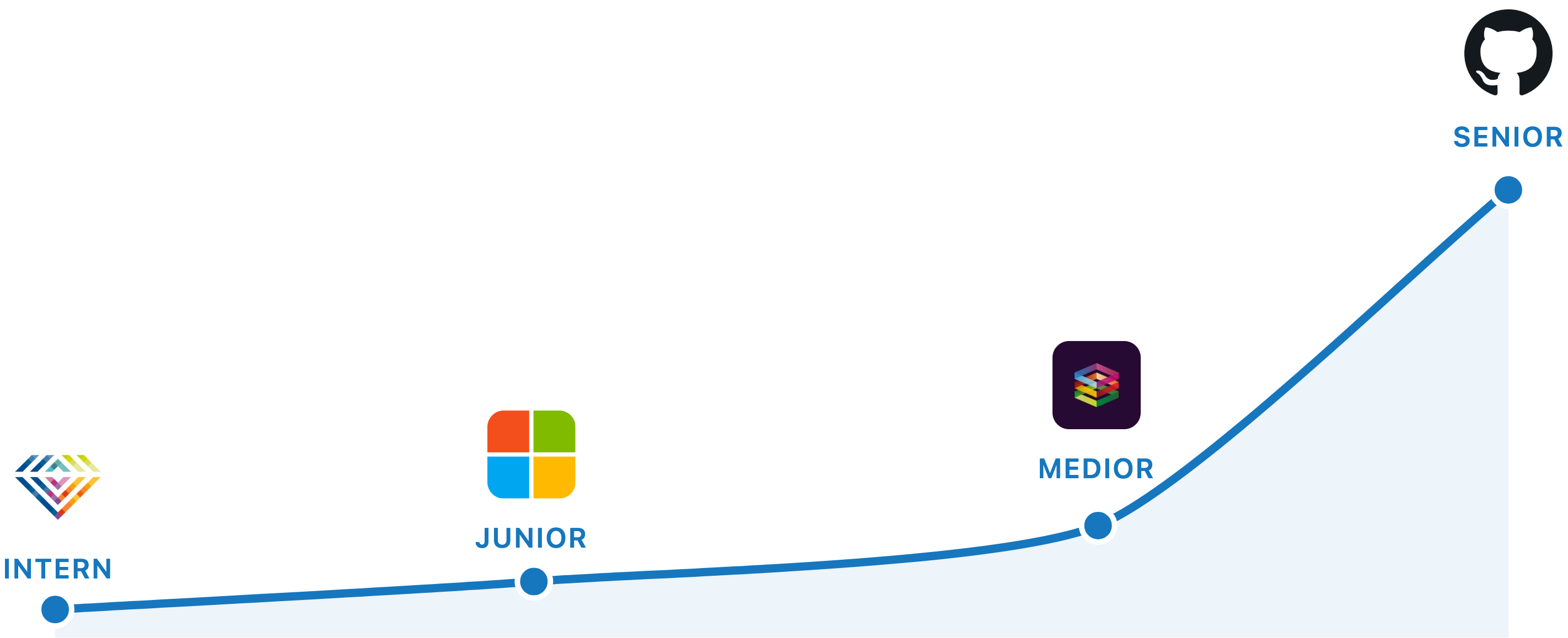
I've since worked remotely for international software companies throughout my career. Proof that the high-paid remote path is possible for anyone with the right skills and motivation. In the end, I went from a $500/month internship to 6 figures as a Senior AI Engineer at GitHub.
Now I teach over 22,000 engineers on YouTube. Becoming an AI-Native Engineer is a system I lived through and offer to you today.
Real Results

Vittor
AI Engineer
Landed his first AI Engineering role in 3 months
"The coaching played a huge part in my success. I focused on AI fundamentals, the certification path, and soft skills like professional writing. Having access to expert guidance gave me confidence during interviews and helped me feel I was on the right path.
I built my own platform (simple but functional) and deployed it on AWS. I used it in my portfolio and showcased it during interviews. The way complex topics were explained, especially the restaurant analogy for AI systems, really stuck with me. Focusing on doing the basics well was absolutely essential."
What You Will Get
Personalized Roadmap & Career Strategy
A custom plan tailored to your background, goals, and timeline. No generic advice.
Weekly 1:1 Coaching Calls
Direct access to Zen for guidance, project feedback, and answers to your questions.
Portfolio-Ready AI Projects
Build production-grade AI applications to showcase to employers. Work that gets you hired.
Interview Prep & Mock Interviews
Practice technical and behavioral interviews. Learn what hiring managers look for.
Resume & LinkedIn Optimization
Transform your online presence to attract recruiters. Stand out from other applicants.
Community Career Support
Join the AI Native Engineer community. Not seeing results yet? You stay and keep going. We're with you through the ups and downs.
Understanding the Ladder Is the First Step to Climbing It.
Every month you delay can cost you thousands in lost earning potential. While you're watching tutorials, others are landing $120K+ AI Engineering roles.
I can only work with a limited number of 1:1 clients at a time to ensure you get the personalized attention you deserve.
Frequently Asked Questions
What defines a Junior/Entry-Level AI Engineer?
Junior AI Engineers (typically 0-2 years) focus on learning and execution. You complete well-defined tasks with guidance, ask questions frequently, and build foundational skills. Expectations: implement features from specs, fix bugs, write tests, participate in code reviews. Salary range: $70K-$110K depending on location and company. Success at this level means: shipping code that works, learning quickly, asking good questions, and taking feedback well. Your manager defines what to work on.
What defines a Mid-Level AI Engineer?
Mid-Level AI Engineers (typically 2-4 years) work independently on most tasks. You own features end-to-end, make technical decisions within your scope, and start helping junior engineers. Expectations: break down projects into tasks, choose appropriate approaches, identify risks and edge cases. Salary range: $100K-$150K. Success at this level means: delivering complete features without hand-holding, improving team practices, and starting to influence technical decisions. You have autonomy within your assigned work.
What defines a Senior AI Engineer?
Senior AI Engineers (typically 4-7 years) lead projects and influence technical direction. You design systems, make architectural decisions, and are responsible for project success. Expectations: lead cross-functional initiatives, mentor team members, identify and solve problems proactively. Salary range: $150K-$250K. Success at this level means: projects succeed because of your leadership, others grow because of your mentorship, and you improve how the team works. You define what to work on within team priorities.
What defines a Staff AI Engineer?
Staff AI Engineers (typically 7-12+ years) set technical direction for multiple teams or significant areas. You solve problems no one else can, influence company-wide decisions, and multiply the effectiveness of others. Expectations: design systems that impact multiple teams, represent engineering in leadership discussions, drive technical strategy. Salary range: $250K-$400K+. Success means: entire product areas succeed because of your technical vision, senior engineers grow under your guidance, and company technical direction improves.
What defines a Principal/Distinguished AI Engineer?
Principal AI Engineers (typically 12+ years, but can be faster) define technical direction for the company or major business units. You solve problems that shape the company's future, influence industry direction, and are recognized externally. Expectations: company-critical technical decisions, external thought leadership, building organizational capabilities. Salary range: $350K-$600K+. These roles are rare—most companies have few or no principal engineers. Impact is measured at the business level, not project level.
How do I advance to the next level?
Advancing requires consistently performing at the next level before promotion. For each level: 1) Understand what that level actually does (not just the title). 2) Start doing that work while in your current role. 3) Get feedback on gaps. 4) Close gaps deliberately. Key insight: promotions recognize what you're already doing, not potential. The biggest jump is Junior to Mid (independence) and Senior to Staff (scope beyond your team). Time at level is a minimum requirement, not a guarantee.
Do years of experience determine level?
Years are a rough indicator but not deterministic. Some engineers reach Senior in 3-4 years; others never get past Mid-level in 10+ years. What matters: scope of impact, quality of judgment, ability to operate independently, and leadership (technical and interpersonal). Companies use years as a filter but evaluate based on demonstrated capability. Don't obsess over years—focus on expanding your impact and developing judgment.
How long does it take to advance between levels?
Typical timelines: Junior to Mid: 1-3 years. Mid to Senior: 2-4 years. Senior to Staff: 3-6 years. Staff to Principal: 4-8+ years (if ever). These are minimums at good companies—faster is possible with exceptional performance and right opportunities. Slower is common if you're not deliberately working toward advancement or at a company without growth opportunities. The Senior to Staff jump is where most careers plateau.
What if I don't land interviews in 90 days?
You become a member of the AI Native Engineer community, and you stay and keep going. Career transitions take different amounts of time for everyone, and I'm not going to abandon you if things take longer. You get ongoing support through good times and bad.
How is this different from online courses?
Online courses give you content. 1:1 coaching gives you a personalized roadmap, direct feedback on your work, career strategy, interview prep, and accountability. You get answers to your specific questions and guidance tailored to your unique situation instead of generic advice meant for everyone.
What's the investment for 1:1 coaching?
Investment details are discussed during the 30-minute strategy call, where we'll assess your goals and create a custom plan. The program is designed to pay for itself quickly through your increased salary. Most AI engineers see a 20-50% pay increase.
Can I do this while working full-time?
Absolutely. Most of my clients work full-time and make steady progress. We'll schedule calls at times that work for you and create a realistic plan that fits your schedule. Consistency matters more than intensity.
Ready to Land Your AI Role?
Stop watching others succeed. Start building your AI career today.
30-minute strategy call • Limited spots available