AI Engineer: Startup vs Enterprise
Which Company Type Fits Your Goals?
Same skills, wildly different environments. One offers potential wealth and rapid growth, the other offers stability and structured career paths.
Here's how to choose wisely.
AI Native Engineer Community Access
Startup Chaos or Enterprise Structure?
You're Not Sure Which Environment Suits You
Startups promise ownership and upside, but most fail. You don't want to trade years of work for worthless equity.
Enterprises pay well but feel slow. You worry about getting stuck in meetings and politics instead of building.
You're not sure which environment will actually accelerate your career. Both have success stories and cautionary tales.
Here's How Each Environment Actually Works for AI Engineers
The AI Career Accelerator
Both paths can be excellent. The key is matching your career stage, risk tolerance, and goals to the right company type.
Startup Environment
Broad ownership, rapid learning, equity lottery, resource constraints, high impact
Enterprise Environment
Deep specialization, stable income, clear ladder, more resources, slower pace
Key Factor
Your risk tolerance and career stage matter more than which is 'better'
Meet Your Mentor

When I started in tech, I was based in the Netherlands with no connections and only thousands of video game hours under my belt. Not exactly the ideal starting point.
My first tech job was software tester. One of the most junior roles you can start with. I was just happy someone took a chance on me.
I kept learning. Kept pivoting. But what actually accelerated my career wasn't more certifications or more code. It was learning to solve problems that matter and proving beyond a doubt that what I built solved real problems. That's the skill that stays future-proof, even with AI.
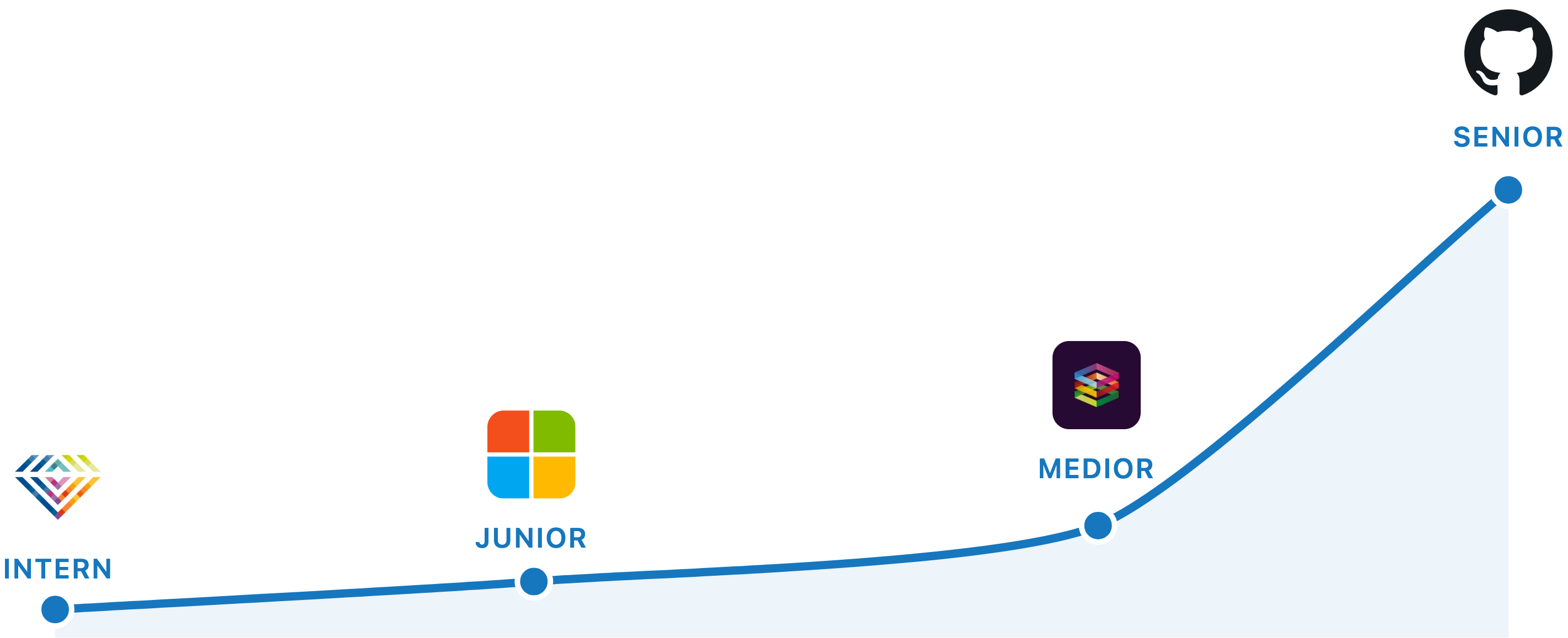
I've since worked remotely for international software companies throughout my career. Proof that the high-paid remote path is possible for anyone with the right skills and motivation. In the end, I went from a $500/month internship to 6 figures as a Senior AI Engineer at GitHub.
Now I teach over 22,000 engineers on YouTube. Becoming an AI-Native Engineer is a system I lived through and offer to you today.
Real Results

Vittor
AI Engineer
Landed his first AI Engineering role in 3 months
"The coaching played a huge part in my success. I focused on AI fundamentals, the certification path, and soft skills like professional writing. Having access to expert guidance gave me confidence during interviews and helped me feel I was on the right path.
I built my own platform (simple but functional) and deployed it on AWS. I used it in my portfolio and showcased it during interviews. The way complex topics were explained, especially the restaurant analogy for AI systems, really stuck with me. Focusing on doing the basics well was absolutely essential."
What You Will Get
Personalized Roadmap & Career Strategy
A custom plan tailored to your background, goals, and timeline. No generic advice.
Weekly 1:1 Coaching Calls
Direct access to Zen for guidance, project feedback, and answers to your questions.
Portfolio-Ready AI Projects
Build production-grade AI applications to showcase to employers. Work that gets you hired.
Interview Prep & Mock Interviews
Practice technical and behavioral interviews. Learn what hiring managers look for.
Resume & LinkedIn Optimization
Transform your online presence to attract recruiters. Stand out from other applicants.
Community Career Support
Join the AI Native Engineer community. Not seeing results yet? You stay and keep going. We're with you through the ups and downs.
AI Startups Raised $47B in 2025. The Competition for AI Talent Has Never Been Higher.
Every month you delay can cost you thousands in lost earning potential. While you're watching tutorials, others are landing $120K+ AI Engineering roles.
I can only work with a limited number of 1:1 clients at a time to ensure you get the personalized attention you deserve.
Frequently Asked Questions
How do AI engineer salaries compare between startups and enterprises?
Enterprise AI engineers at major tech companies earn $180K-$350K total comp (salary + equity + bonus). Well-funded startups (Series B+) pay $150K-$250K base salary plus significant equity. Early-stage startups (seed to Series A) often pay $100K-$180K base with larger equity grants. The cash gap is real: you might take a $50K-$100K salary cut at a startup. The bet: your equity could be worth $500K+ if the company succeeds. Most startups fail, so the expected value of startup equity is lower than it appears. Choose startups for the experience and upside, not the guaranteed compensation.
Is startup equity actually worth anything?
Statistically, most startup equity ends up worthless. 90% of startups fail. Of those that survive, many have liquidation preferences that wipe out common stock. Your 0.5% of a startup is probably worth $0. However, when startups succeed, the payouts can be life-changing: early AI engineers at OpenAI, Anthropic, and similar companies made millions. The calculation: treat equity as a lottery ticket with potential upside, not guaranteed compensation. If you need the cash equivalent of enterprise salary to live comfortably, startups may not be right for you.
Where will I learn more: startup or enterprise?
Different types of learning. Startups teach breadth: you'll touch everything from model selection to deployment to customer support. You'll learn to ship fast under constraints. Enterprises teach depth: you'll work on systems at massive scale with specialized experts. You'll learn production practices and reliability engineering. For AI engineers specifically: startups often let you experiment with newer techniques, while enterprises teach you to make AI work reliably at scale. Early career? Startups build versatility. Mid-career specialization? Enterprises provide depth.
Which has better work-life balance: startup or enterprise?
Generally, enterprises offer better work-life balance. Standard 40-45 hour weeks, predictable schedules, generous PTO, and mature management. Startups vary wildly: some have healthy cultures, others expect 50-60+ hour weeks. Early-stage startups often require intense periods around launches and fundraising. The best startups are intentional about sustainable pace. The worst burn people out. Due diligence: during interviews, ask about on-call rotations, weekend work expectations, and how the team handled the last crisis. Culture varies more within company types than between them.
Which is better for long-term career growth?
Both can accelerate your career, differently. Enterprise path: clear ladder (junior → senior → staff → principal), brand recognition on resume, network of experienced engineers, training and conference budgets. Startup path: rapid title progression, broad experience, potential for leadership roles as company grows, entrepreneurial network. The ideal career often includes both: learn fundamentals at an enterprise, then apply them at a startup (or vice versa). Having both on your resume signals versatility. The worst career move: staying too long in one environment when you've stopped growing.
How do I decide between startup and enterprise?
Choose startup if: you have financial runway (savings, partner income), you want broad ownership and rapid learning, you're excited about a specific mission, you can tolerate ambiguity and failure, or you're early career and want to accelerate. Choose enterprise if: you need stable income and benefits, you want deep specialization and mentorship, you prefer clear career progression, you have family obligations requiring stability, or you want to learn from world-class infrastructure. Not either/or: many successful AI engineers do 2-3 years at an enterprise to learn fundamentals, then join a startup with strong skills.
How much experience do I need for each company type?
Enterprises hire at all levels with structured onboarding. Startups prefer experienced engineers (3+ years) who can contribute immediately with less hand-holding. However, early-stage startups sometimes hire junior engineers willing to learn fast. The key difference: enterprises invest in growing you, startups need you productive quickly. If you're junior, enterprise first builds your foundation. If you're experienced, startups offer more ownership and impact.
How long should I stay at each company type?
Enterprise: 2-4 years is ideal. Less than 2 years looks like job-hopping. More than 5-6 years without significant growth raises questions. Startup: highly variable. If it's succeeding, stay for the ride. If it's failing, leave before the ship sinks. Typical startup tenure: 1.5-3 years. Don't stay at a failing startup out of loyalty—your equity is worthless anyway. Vest your cliff (usually 1 year), evaluate honestly, and make a decision.
What if I don't land interviews in 90 days?
You become a member of the AI Native Engineer community, and you stay and keep going. Career transitions take different amounts of time for everyone, and I'm not going to abandon you if things take longer. You get ongoing support through good times and bad.
How is this different from online courses?
Online courses give you content. 1:1 coaching gives you a personalized roadmap, direct feedback on your work, career strategy, interview prep, and accountability. You get answers to your specific questions and guidance tailored to your unique situation instead of generic advice meant for everyone.
What's the investment for 1:1 coaching?
Investment details are discussed during the 30-minute strategy call, where we'll assess your goals and create a custom plan. The program is designed to pay for itself quickly through your increased salary. Most AI engineers see a 20-50% pay increase.
Can I do this while working full-time?
Absolutely. Most of my clients work full-time and make steady progress. We'll schedule calls at times that work for you and create a realistic plan that fits your schedule. Consistency matters more than intensity.
Ready to Land Your AI Role?
Stop watching others succeed. Start building your AI career today.
30-minute strategy call • Limited spots available