AI Implementation vs AI Research:
Implementation Wins in 2026
The market has spoken. Companies pay more for engineers who ship AI products than researchers who write papers.
Here's why—and what it means for your career.
AI Native Engineer Community Access
The PhD Paradox:
Why Research Experience Can Hurt Your Earnings
You're told a PhD is the path to AI careers, but entry-level research roles pay $70-110K while implementers start at $130K+.
Academic credentials look impressive, but companies want engineers who can ship products, not publish papers.
You've spent years on theory only to find employers asking 'but can you build a production RAG system?'
Here's the Market Reality
The AI Career Accelerator
AI research and AI implementation are both valuable. But in 2026, companies are desperate for implementers while research roles are oversaturated. The pay reflects this supply-demand imbalance.
Research Focus
Publishing papers, advancing state-of-the-art, training new models, theoretical breakthroughs
Implementation Focus
Building products, shipping features, deploying to production, solving business problems with AI
The Pay Gap
Implementation: $150K-$250K+. Research: $70K-$150K (except elite labs). Companies need builders.
Meet Your Mentor

When I started in tech, I was based in the Netherlands with no connections and only thousands of video game hours under my belt. Not exactly the ideal starting point.
My first tech job was software tester. One of the most junior roles you can start with. I was just happy someone took a chance on me.
I kept learning. Kept pivoting. But what actually accelerated my career wasn't more certifications or more code. It was learning to solve problems that matter and proving beyond a doubt that what I built solved real problems. That's the skill that stays future-proof, even with AI.
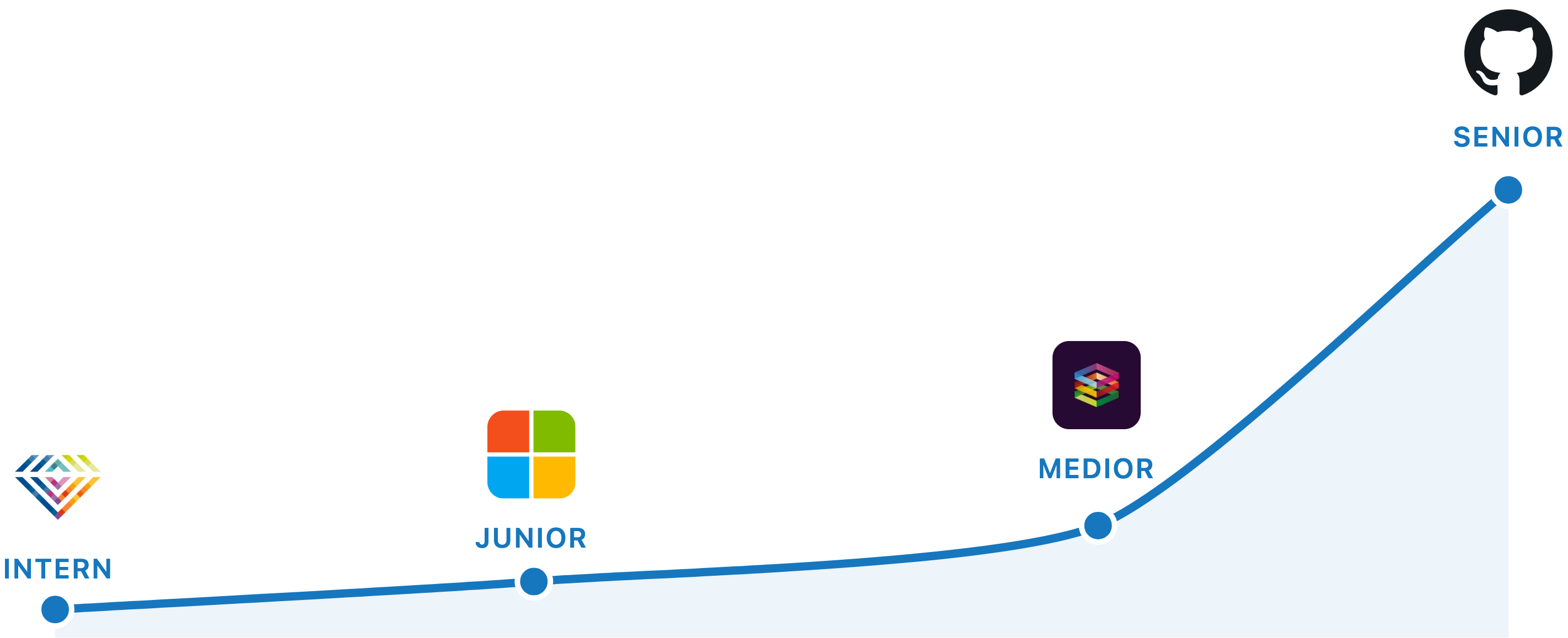
I've since worked remotely for international software companies throughout my career. Proof that the high-paid remote path is possible for anyone with the right skills and motivation. In the end, I went from a $500/month internship to 6 figures as a Senior AI Engineer at GitHub.
Now I teach over 22,000 engineers on YouTube. Becoming an AI-Native Engineer is a system I lived through and offer to you today.
Real Results

Vittor
AI Engineer
Landed his first AI Engineering role in 3 months
"The coaching played a huge part in my success. I focused on AI fundamentals, the certification path, and soft skills like professional writing. Having access to expert guidance gave me confidence during interviews and helped me feel I was on the right path.
I built my own platform (simple but functional) and deployed it on AWS. I used it in my portfolio and showcased it during interviews. The way complex topics were explained, especially the restaurant analogy for AI systems, really stuck with me. Focusing on doing the basics well was absolutely essential."
What You Will Get
Personalized Roadmap & Career Strategy
A custom plan tailored to your background, goals, and timeline. No generic advice.
Weekly 1:1 Coaching Calls
Direct access to Zen for guidance, project feedback, and answers to your questions.
Portfolio-Ready AI Projects
Build production-grade AI applications to showcase to employers. Work that gets you hired.
Interview Prep & Mock Interviews
Practice technical and behavioral interviews. Learn what hiring managers look for.
Resume & LinkedIn Optimization
Transform your online presence to attract recruiters. Stand out from other applicants.
Community Career Support
Join the AI Native Engineer community. Not seeing results yet? You stay and keep going. We're with you through the ups and downs.
Every Company Needs AI Builders. Few Need Researchers.
Every month you delay can cost you thousands in lost earning potential. While you're watching tutorials, others are landing $120K+ AI Engineering roles.
I can only work with a limited number of 1:1 clients at a time to ensure you get the personalized attention you deserve.
Frequently Asked Questions
What is the difference between AI implementation and AI research?
AI researchers work on advancing the field: training new models, publishing papers, pushing state-of-the-art capabilities. They need deep math, PhD-level theory, and focus on novel contributions. AI implementers work on building products: using existing models and APIs to solve business problems, shipping features to users, and maintaining production systems. They need software engineering skills, practical problem-solving, and ability to ship. Researchers ask 'what's possible?' Implementers ask 'how do we ship this?'
Why is there such a big salary gap between implementation and research?
Supply and demand. Thousands of PhD graduates enter the job market each year wanting research positions. Meanwhile, companies desperately need engineers who can actually deploy AI products. Research positions are oversaturated except at elite labs (OpenAI, Anthropic, DeepMind). Implementation roles are undersupplied because most CS education focuses on theory. The result: implementers command $150K-$250K+ while entry-level research pays $70K-$110K at most companies.
Why do companies pay more for implementation skills?
Companies make money from products, not papers. They need engineers who can take existing AI capabilities (LLMs, APIs, open-source models) and turn them into features that users pay for. Every AI startup and enterprise AI initiative needs implementers who can ship. The ROI on implementation is direct and measurable. The ROI on research is speculative and long-term. Compensation reflects this reality.
Does AI research experience have any value?
Yes, but context matters. Deep understanding of how models work helps with debugging and optimization. Research backgrounds are valued at elite labs and for specialized roles. But in general hiring, companies prioritize: Can you build? Can you ship? Can you maintain production systems? Research experience without implementation skills often hurts candidates—employers assume you can't build practical solutions. The best strategy: combine research understanding with proven ability to ship.
Can researchers transition to implementation roles?
Yes, and many are doing exactly that. Researchers who learn production Python, software engineering practices, and deployment skills become extremely valuable—they combine theoretical understanding with practical abilities. The transition typically takes 3-6 months of focused learning on: production code quality, API design, deployment, system design, and building complete applications. Stop thinking like a researcher (publish) and start thinking like an engineer (ship).
What's the best path for someone starting their AI career?
Focus on implementation from day one. Learn to build AI-powered applications. Master LLM APIs, RAG systems, and production deployment. Understand enough theory to debug issues, but prioritize shipping over studying. Build portfolio projects that demonstrate you can take AI from idea to deployed product. Skip the PhD unless you specifically want a research career at elite labs. The fastest path to $150K+ is implementation, not research.
Do I need a PhD for AI implementation roles?
No. Most AI implementation roles don't require advanced degrees. Companies want engineers who can build and ship, which they can assess through portfolio projects and technical interviews. A PhD can actually be a disadvantage if employers assume you can't write production code. Self-taught implementers with strong portfolios regularly out-earn PhD holders in industry roles.
How long does it take to become a skilled AI implementer?
3-6 months with a software engineering background. You're learning to use AI tools (LLM APIs, vector databases, RAG patterns), not create them. Compare this to 4-6 years for a PhD in AI research. The implementation path is faster, pays more, and has more job openings. If you want to work in AI quickly and earn well, implementation is the obvious choice.
What if I don't land interviews in 90 days?
You become a member of the AI Native Engineer community, and you stay and keep going. Career transitions take different amounts of time for everyone, and I'm not going to abandon you if things take longer. You get ongoing support through good times and bad.
How is this different from online courses?
Online courses give you content. 1:1 coaching gives you a personalized roadmap, direct feedback on your work, career strategy, interview prep, and accountability. You get answers to your specific questions and guidance tailored to your unique situation instead of generic advice meant for everyone.
What's the investment for 1:1 coaching?
Investment details are discussed during the 30-minute strategy call, where we'll assess your goals and create a custom plan. The program is designed to pay for itself quickly through your increased salary. Most AI engineers see a 20-50% pay increase.
Can I do this while working full-time?
Absolutely. Most of my clients work full-time and make steady progress. We'll schedule calls at times that work for you and create a realistic plan that fits your schedule. Consistency matters more than intensity.
Ready to Land Your AI Role?
Stop watching others succeed. Start building your AI career today.
30-minute strategy call • Limited spots available